
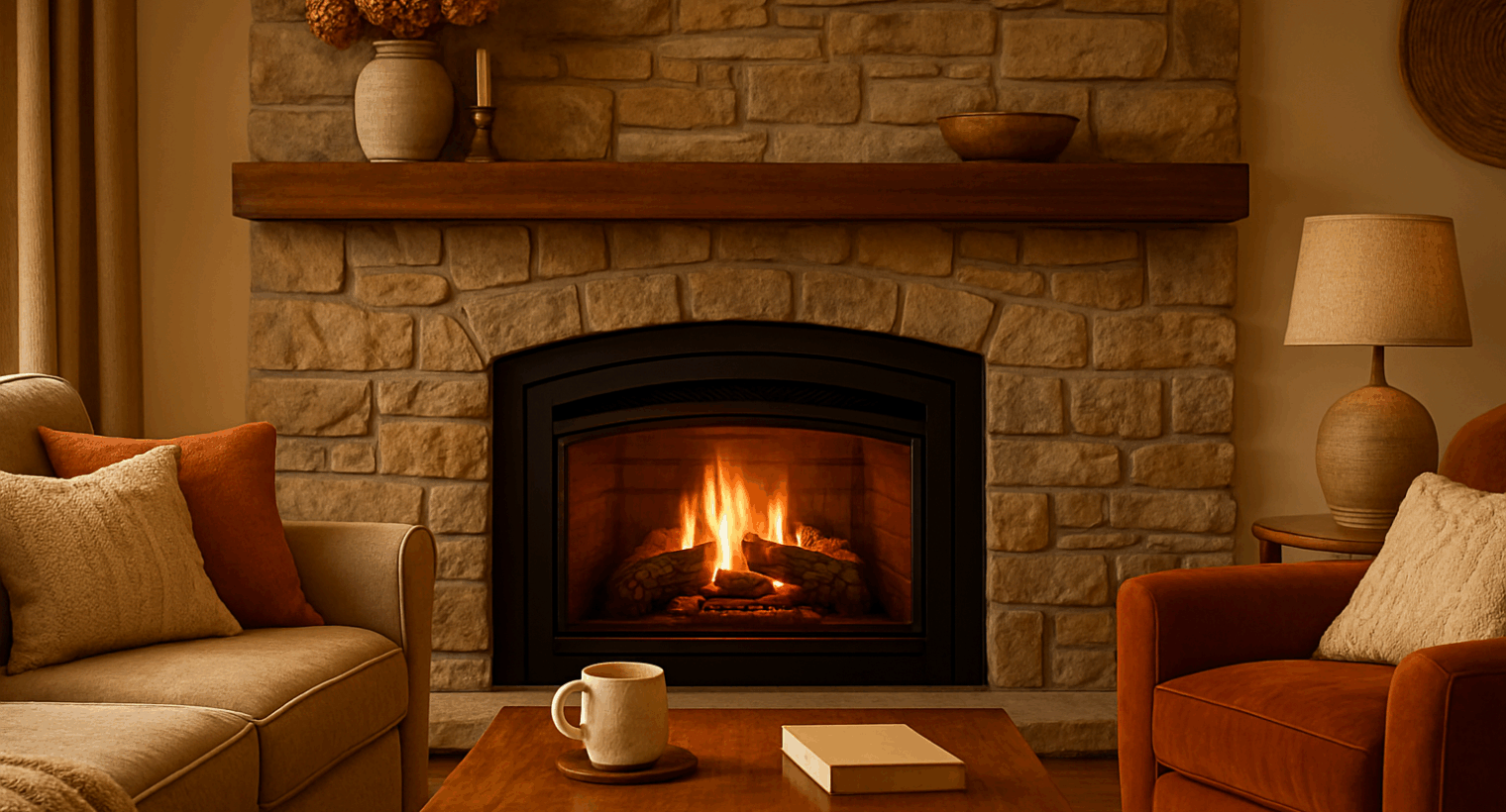
When temperatures drop, there’s nothing better than stepping into a warm, cozy home. Whether it’s the crackle of a wood fire, the glow of a gas fireplace, or the quick convenience of a space heater, we all have our favorite way to stay warm in the winter. But here’s something many homeowners don’t think about: your heat source can have a big impact on your indoor air quality. Some heating methods keep your home toasty and your air clean others introduce pollutants that can affect your comfort, your health, and even the longevity of your home. Let’s take a look at how common heating sources stack up and which options are the healthiest for your winter air.
Wood-Burning Fireplaces: Cozy, But at a Cost
Wood-burning fireplaces give us that nostalgic winter ambiance the sound, the smell, the glow. Certainly cozy, but in terms of IAQ they’re one of the most problematic heating sources. Burning wood creates fine particulate matter (PM2.5), carbon monoxide (CO), and volatile organic compounds (VOCs). These pollutants don’t always stay in the chimney; they can enter your home every time you open the fireplace door or when the chimney draft isn’t perfect.
IAQ impacts from wood-burning fireplaces include:
- Increased particulate matter that can irritate lungs and airways
- Potential carbon monoxide intrusion
- Lingering smoke odors and chemical byproducts
- More dust and residue settling on furniture and surfaces
If you love your wood fire too much to give it up, proper maintenance is key: annual chimney cleaning, well-aged firewood, and keeping your damper fully open while burning.
Gas Fireplaces: Cleaner, But Not Completely Clean
Gas fireplaces tend to burn cleaner than wood, which makes them a common choice for people wanting warmth without the mess. They produce far fewer particles, and you won’t get the smoke or soot that comes with real logs. However, gas appliances can still affect IAQ. They may release:
- Carbon monoxide (CO)
- Nitrogen dioxide (NO₂)
- Low levels of VOCs
- Moisture, which can contribute to indoor humidity issues
A properly vented gas fireplace is generally a healthier alternative to wood, but ventless gas fireplaces can be a concern because they release combustion byproducts directly into your home. If you have one, ventilation and CO detectors are non-negotiable.
Space Heaters: Convenient, But Use With Caution
Space heaters are a popular option for spot-heating small bedrooms, offices, or areas that are always a few degrees colder. But depending on the type, they can impact your indoor air in different ways.
Electric space heaters:
These are the cleanest option from an IAQ perspective. They don’t burn fuel, so there’s no combustion pollution. The biggest concerns are safe usage and not overloading circuits.
Fuel-burning space heaters:
These include kerosene heaters or propane heaters. When used indoors (especially unvented models), they can release:
- Carbon monoxide
- Nitrogen dioxide
- Particulate matter
If you choose a fuel-burning heater, ventilation is absolutely essential.
So… Which Option Is Best for Your Winter IAQ?
When it comes to keeping your winter air at its cleanest, electric heat sources come out on top. Electric furnaces, heat pumps, and electric space heaters generate warmth to keep your home comfortable without combustion, meaning they don’t release the pollutants that other systems can. Gas fireplaces fall into a middle category, they burn cleaner than wood and produce fewer particles but they still require proper ventilation, regular maintenance, and carbon monoxide monitoring to keep indoor air healthy. On the other hand, traditional wood-burning fireplaces, while undeniably charming and cozy, are the least IAQ-friendly. They release fine particles and smoke byproducts that can easily make their way into your living spaces and affect air quality.
No Matter How You Heat Your Home, Monitoring Your Air Is Key
Even the cleanest heat source can affect your indoor environment in other ways from increasing dryness to adding humidity to stirring up dust. The best way to understand what’s really in your air is to test it. A Home Air Check test kit can help you identify pollutants such as VOCs, formaldehyde, and overall indoor air contaminants so you can make informed decisions about your winter home environment. Because a warm home is good, but a warm and healthy home is even better.