
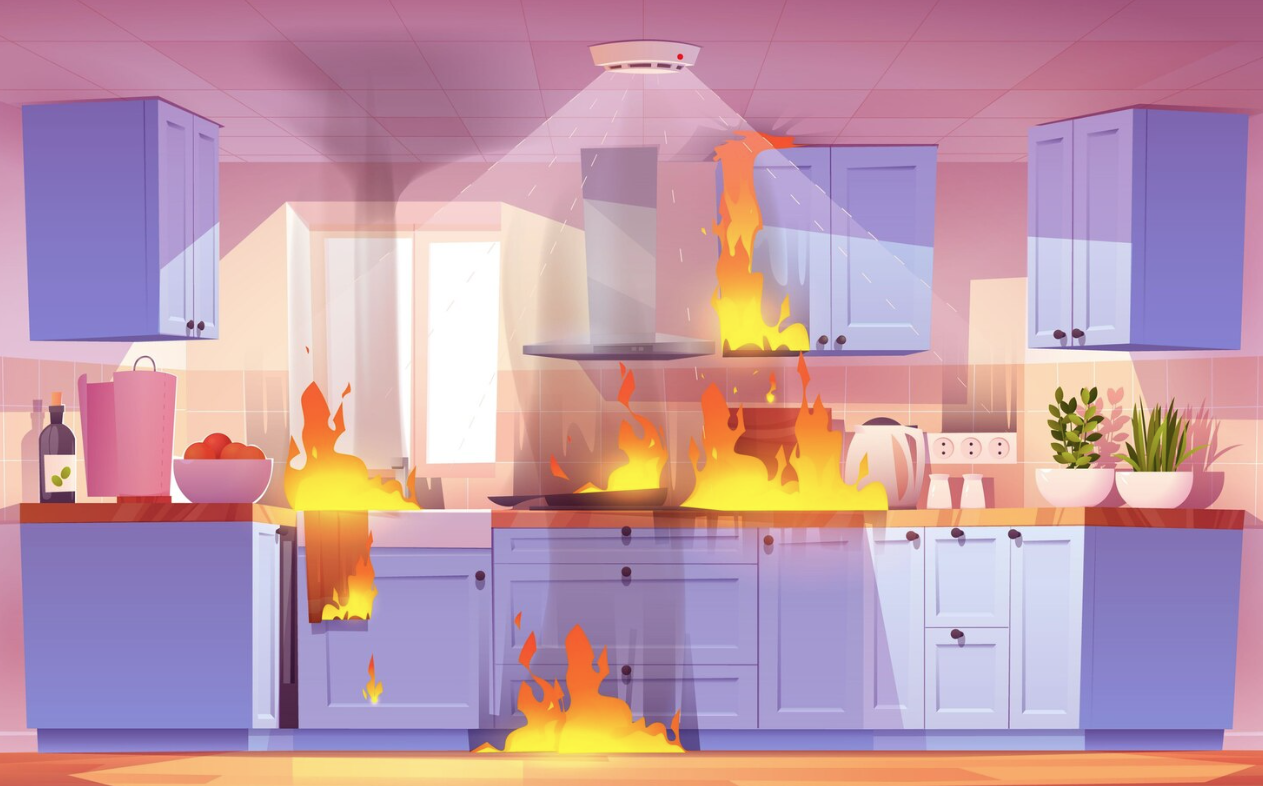
A small house fire can feel like a close call. Maybe it was a kitchen flare-up, a candle that burned too low, or a minor electrical issue that was quickly contained. The damage may look manageable, and your home may still be safe to live in. But even when the flames are small, the impact on your indoor air quality (IAQ) can be significant. Smoke, soot, and combustion byproducts do not simply disappear once the fire is out. They can linger in your air and settle into surfaces throughout your home. Understanding how a minor fire affects indoor air quality can help you take the right steps to restore a healthy environment.
What Happens to Indoor Air During a Small Fire?
When household materials burn, they release a complex mix of airborne pollutants. This includes both visible smoke and microscopic particles that are too small to see. After a fire, indoor air often contains fine particulate matter such as PM2.5, along with soot, ash, volatile organic compounds (VOCs), and other combustion-related gases and chemical byproducts. Even a short-lived fire can push these contaminants into your HVAC system, onto walls and ceilings, and deep into porous materials like carpet, furniture, and upholstery. Because many of these particles are microscopic, they can remain suspended in the air or become embedded in soft surfaces, where they are gradually released back into your breathing space over time.
Why Smoke Residue Continues to Affect IAQ
If you still smell smoke days after the event, that is a sign that residue remains in your home. Smoke particles are incredibly small and sticky. They cling to surfaces and absorb into fabrics. Over time, normal household activity such as walking across carpet, sitting on furniture, or running the HVAC system can reintroduce those particles into the air.
Your HVAC system can also play a role. During the fire, it may have circulated smoke throughout the house. Without inspection and proper filter replacement, it can continue redistributing contaminants. Lingering odor is often a clue that off gassing is still occurring and that your indoor air has not fully returned to normal.
Potential Health Effects After a Minor Fire
Even low-level smoke exposure can irritate the body.
You or your family members may notice:
- Eye or throat irritation
- Persistent cough
- Headaches
- Worsening asthma or allergy symptoms
- A burning or smoky smell that will not go away
Children, older adults, pets, and anyone with respiratory conditions are especially sensitive to post-fire indoor air pollution. If symptoms persist after cleanup, your air quality may need further attention.
How To Improve Indoor Air Quality After a Small House Fire
If your home is structurally safe, there are practical steps you can take to restore healthier indoor air. Start by replacing your HVAC filter right away. Smoke and fine particles may have circulated through your system during the fire, installing a high-quality filter with an appropriate MERV rating can help capture lingering contaminants. In cases of heavier smoke exposure, replacing the filter again after a few weeks is a smart precaution.
Next, focus on thorough cleaning. Soot can cling to walls, ceilings, and hard surfaces, and simply wiping things down may not be enough. Porous materials like curtains, bedding, rugs, and upholstered furniture can also trap smoke particles and slowly release them back into the air. Wash what you can and evaluate heavily affected items carefully.
Finally, increase ventilation when outdoor air quality allows. Opening windows, running exhaust fans, and using a portable HEPA air purifier can help reduce airborne particles as your home continues to recover.
Should You Test Your Indoor Air After a Fire?
Visual inspection cannot confirm whether your indoor air quality has returned to normal. Many fire-related pollutants are invisible and odor may not tell the whole story.
Indoor air quality testing can help you:
- Identify lingering particulate matter
- Detect elevated VOC levels
- Confirm whether cleanup efforts were effective
- Make informed decisions about additional remediation
Testing removes the guesswork and provides clear data about what is happening in your home.
The Bottom Line
A small house fire may not leave major structural damage, but it can still impact your indoor air quality in meaningful ways. Smoke particles are microscopic. Chemical residues are invisible. And without proper cleaning, filtration, and ventilation, those contaminants can remain in your breathing space longer than you expect. Taking proactive steps to evaluate and improve your indoor air after a fire protects both your home and the health of the people inside it.