
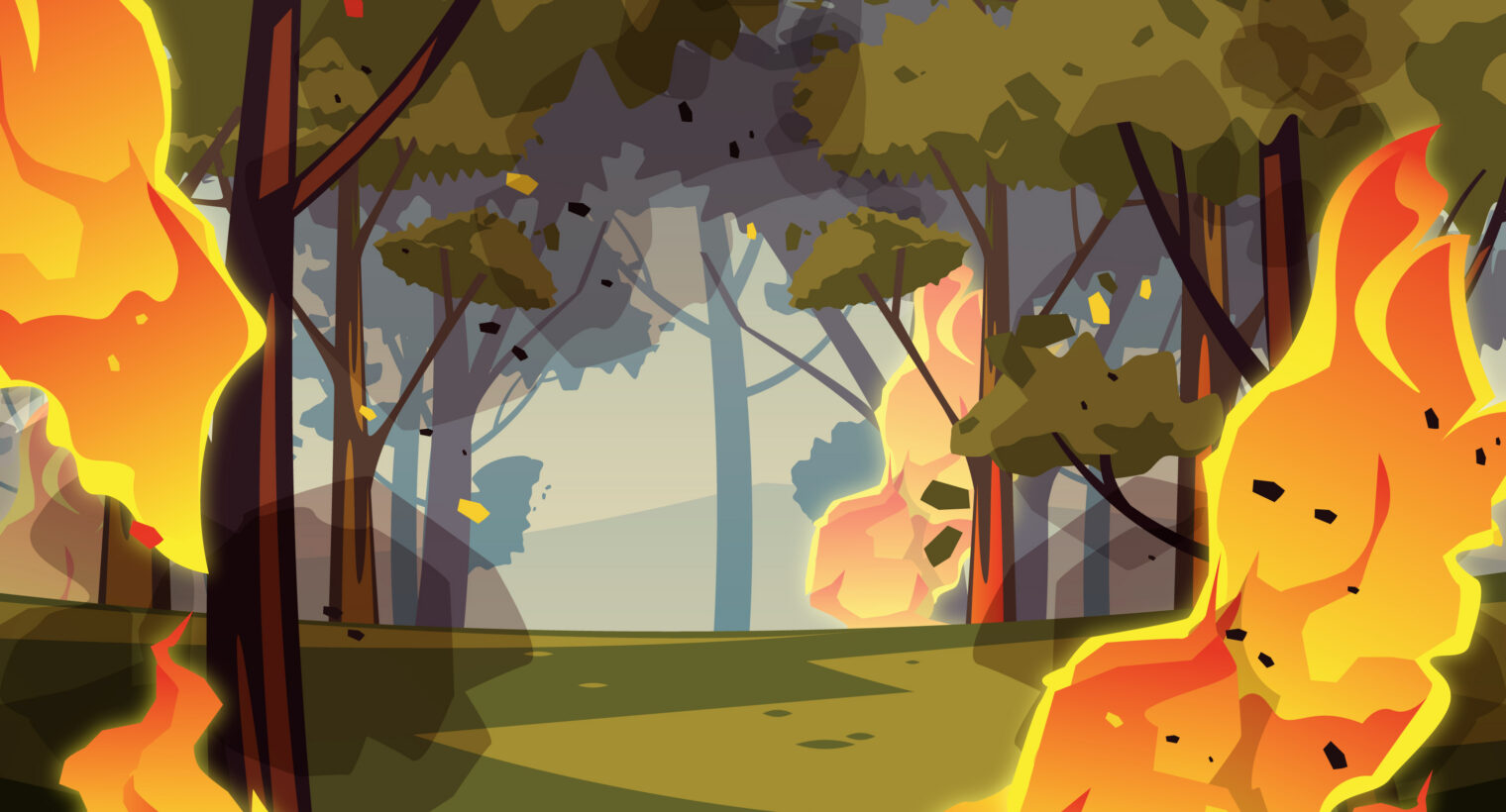
Summer is a time for vacations, backyard barbecues, and enjoying the outdoors, but it also marks the beginning of wildfire season across many parts of North America. As temperatures rise and conditions become drier, the risk of wildfires increases, bringing with it an often-overlooked concern: indoor air quality.
Even if a wildfire isn’t burning nearby, smoke can travel hundreds or even thousands of miles, impacting communities far from the source. While many people check outdoor air quality reports during wildfire season, they often don’t realize that the same pollutants can make their way inside the home. But don’t worry! There are many things you can do to protect your indoor air if you there is wildfire smoke near your home. First, let’s cover how wildfire smoke can enter your home and then talk about what you can do.
How Wildfire Smoke Gets Into Your Home
Your home offers protection from the elements, but it isn’t completely sealed off from the outdoors. Tiny smoke particles and gases can enter through surprisingly small openings, and once inside, they can continue circulating throughout your home.
Wildfire smoke commonly enters through:
- Open windows and doors
- Small gaps around windows and door frames
- Bathroom and kitchen exhaust fans
- HVAC systems that bring in outdoor air
- Attics, crawl spaces, and other small openings
Because many of these particles are microscopic, you may not always see them. Sometimes the first signs are a lingering smoky smell, irritated eyes, a scratchy throat, or an increase in allergy or asthma symptoms.
What’s in Wildfire Smoke?
Wildfire smoke is much more than the smell of burning wood. It contains a complex mixture of pollutants that can affect your health, and the exact composition depends on what is burning. Forests, grasslands, homes, vehicles, and commercial buildings all release different contaminants into the air.
Wildfire smoke may contain:
- Fine particulate matter (PM2.5)
- Volatile Organic Compounds (VOCs)
- Carbon monoxide
- Nitrogen oxides
- Formaldehyde
- Chemicals released from plastics, paints, insulation, treated wood, and other building materials
Many of these pollutants can remain suspended in the air or settle onto surfaces throughout your home. Even after outdoor air quality improves, contaminants may continue circulating indoors until they are removed through filtration, ventilation, or cleaning.
Why Indoor Air Quality Matters During Wildfire Season
Poor indoor air quality can affect anyone, but some people are more sensitive than others. Young children, older adults, pregnant women, and individuals with asthma, allergies, or heart and lung conditions are often the first to notice the effects of wildfire smoke.
Exposure may lead to symptoms such as:
- Coughing or sore throat
- Irritated eyes
- Headaches
- Fatigue
- Shortness of breath
- Worsening asthma or allergy symptoms
Since most people spend the majority of their time indoors, protecting the air inside your home becomes just as important as limiting your exposure outdoors.
Steps You Can Take to Protect Your Indoor Air
The good news is that there are several practical ways to reduce the amount of wildfire smoke entering your home and improve your indoor air quality during a smoke event. Start by keeping windows and exterior doors closed whenever outdoor air quality is poor. While fresh air is normally encouraged, wildfire season is one of the few times when it’s better to keep smoky outdoor air outside. If temperatures rise, rely on your air conditioning rather than opening windows. Your HVAC system can also help protect your indoor air when equipped with a high-quality filter that’s compatible with your system. During periods of prolonged smoke exposure, check your filter more frequently, as it may become dirty faster than usual.
Portable air purifiers with HEPA filtration can provide another layer of protection by capturing fine airborne particles. Running one in your living room or bedroom can help create a cleaner environment while smoke levels remain elevated outdoors. You can even make a DIY filter with a box fan! (Here’s How!) It’s also worth taking a few minutes to inspect your home for gaps around windows, doors, and utility openings. Sealing these small leaks can reduce smoke infiltration while improving your home’s energy efficiency.
Finally, try to avoid adding more pollutants to your indoor air while wildfire smoke is already affecting your area. If possible, limit activities such as:
- Burning candles or incense
- Smoking indoors
- Using a wood-burning fireplace
- Frying foods at very high temperatures
- Using strong chemical cleaners or solvents
Staying Informed
Lastly, one of the most important things you can do during wildfire season is to keep yourself informed. When smoke is in the air, conditions can change quickly. What looks like a clear morning can turn hazy by the afternoon, so it’s important to keep an eye on local updates. One of the best tools is the Air Quality Index (AQI), which gives you real-time information on how healthy, or hazardous the air is in your area. Larger wildfire events often have an Air Resource Advisor assigned to provide smoke outlooks, helping communities know what to expect in the coming days.
In addition to national resources like the CDC’s wildfire smoke page, the EPA’s wildfire page your state and local health departments can also be valuable sources of information. They often share up-to-date guidance on both wildfire smoke conditions and public health recommendations. By staying informed through trusted sources, you’ll know when it’s safe to let fresh air in, when to keep your home sealed up tight, and how best to protect your health until air quality improves.
Curious about the quality of your Indoor Air? Click Here!